Made to Fall in Love with Ola Idris
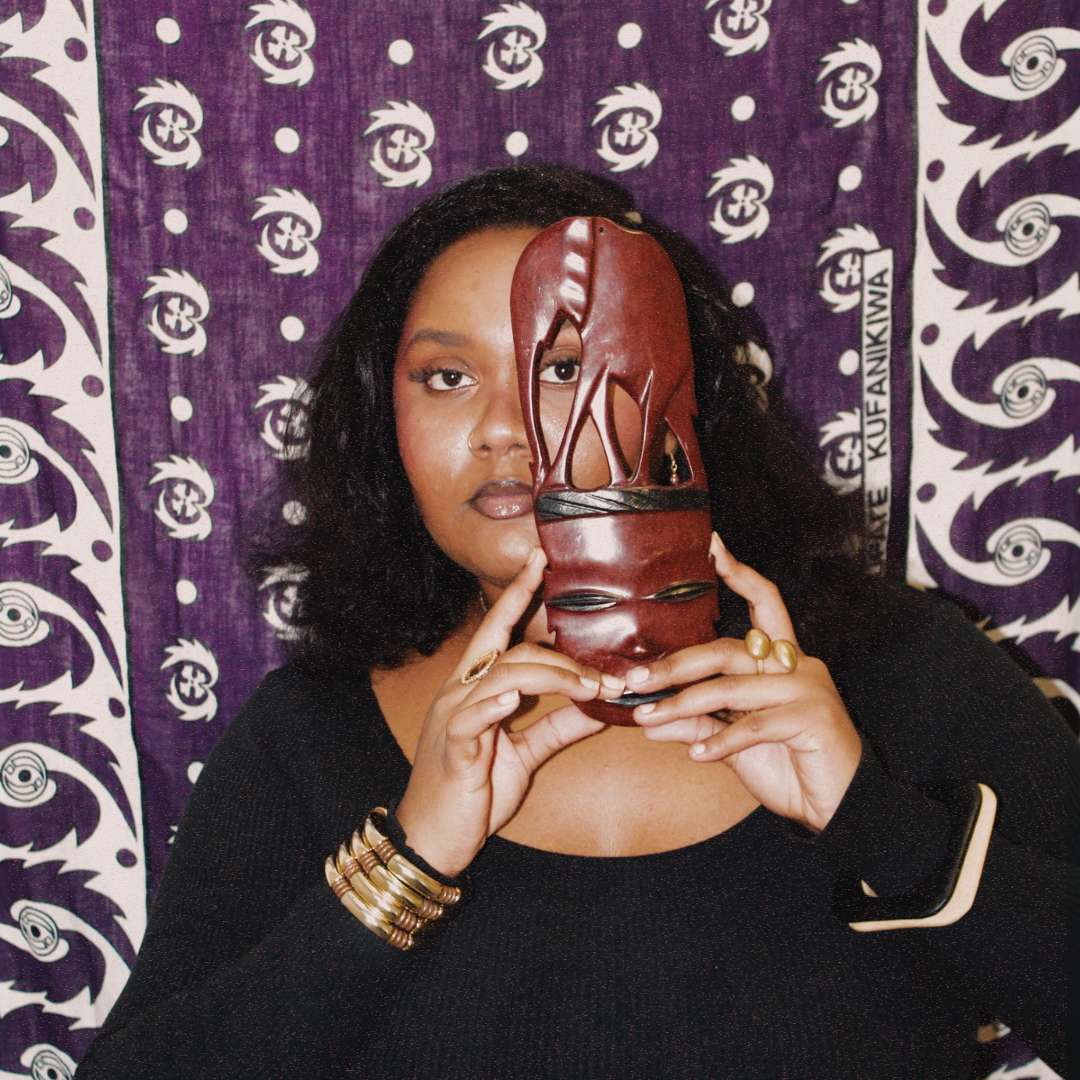
Love, Freedom
and the Dance Floor
Made to Fall in Love is a series that explores how African and Caribbean communities across the diaspora experience and understand love. In our 4th edition, Ola Idris reflects on love in community and movement.
I love the dance floor, and I love my friends. I love my friends even more when we are on the dance floor. I love them more because on the dance floor, I love myself deeper. On the dance floor, I have learnt to love you, to love me, to love the DJ, to love life, and most of all, to love our freedom completely.
In the last few years, it's been hard not to note how much I have been struggling. Between the pandemic, the constant job instability, how expensive everything is and the war that is being fought at home and justified here, it's extremely hard to find joy that lasts. I spend hours scrolling on TikTok, fishing for a giggle, or getting lost in a book that I won’t remember past the hour it's done. My friends and I jump on FaceTime calls, catch up, complain, gossip a little bit and then complain again. It’s hard to look forward to any social gathering, knowing that most of them will cost me hundreds of dollars I can not afford to give. If I do pay the tier 3 tickets for the function and devote the hours to dressing up, I spend my ride over praying that this time will be different. That it will be worth it. I know that it may likely not, with crowds of blank faces and anxious energies.
I am a social person. I have been a part of many different forms of community and gatherings. I am grateful that I don’t always feel anxious talking to a stranger. I have also tested socializing in different forms. I have spent afternoons sitting in parks, listening to Sufi podcasts and people-watching with a neighbour. I have tried different crafts, classes and conversation circles. I overfill my calendar with many random creative projects and try to gain a semblance of ‘purpose’. Nothing has felt as good as a night out dancing with my friends, though. Honestly, nothing feels as good as dancing in a room full of bodies, lowered inhibitions, and the thick bass of music in service to movement.
The first time I went to a rave, I was anxious that I would get bored with the steady electronic music and not be able to dance, having been used to “Black Pop” music. My friend Ayat gave me specific instructions on how to tap into my dancing body in an unfamiliar space. She said, “The moment you walk in, shake off your limbs, then shake your hips, rotate your neck and internally remind yourself that you are safe here, you are safe to move, safe to explore and that your body will recognize the music even if your mind doesn’t”. Following her instructions unlocked a principle in me that has carried me into many unknown dancefloors since. However, not everyone has an Ayat in their corner.
When I used to go out before, my dancing was relegated to my feet and head. I would two-step and nod my head to the beat. I frequented spaces that stuck to rap and pop music, so if I knew the song, I maybe would also sing along. I wanted to be the cool, mysterious girl that guys felt they could approach and dance with, so I limited my movements and didn’t take up any more space than I needed to. During the time I started going out with Ayat, someone for whom dancing was a religious act, I learnt to move my hands more. I learnt to lean into what my hips felt like doing. I listened to my spine and took wide steps with my feet. My body started remembering that it was whole, that it was free to move in whatever way, and that no one’s perception of me was more important than how my body and I felt.
My friend Sara, tired of going out and constantly being met with non-Black crowds singing to the same five songs on rotation, decided one day to throw a party at an obscure lounge. She hired a DJ, one that didn't even have an Instagram page at the time, got some food platters from a local Sudanese aunty and invited 50 or so of her friends. The DJ blessed us with throwback Dancehall, R&B classics and some good ole Hip Hop. For that night, we danced, laughed a lot, ate good food and went home. Do you know how amazing it is to eat macaroni pie and chicken and then still return to the dance floor?! I am sure our elders know.
In the morning, a few of us went out for a late brunch and couldn’t stop debriefing about how good the night felt. For days after, I was still buzzing. I was sore from dancing, but the kind that you want to last forever. A physical imprint of everything that went right. Every little while, when the inspiration strikes her, Sara throws another one. They are lowkey, intentionally by invite only and in a Black-owned, unknown hole-in-the-wall restaurant or lounge. Any time someone new came to the party, Sara would introduce them to someone so they didn’t feel like an outsider, and slowly, the parties opened up to more friends of friends. Some would come back without the friend who brought them, and eventually, we started building a sense of belonging to each other. A real community.
Having been armed with the principle of playing on the dancefloor by Ayat and the consistency of a low-barrier, familiar party space by Sara, I finally started to feel like I had something to look forward to. The dance floor, with my most cherished friends, started saving my life quite literally. I suspect it did the same for many of the other frequent attendees. It's radical what having a safe place, to sing freely, to own the dance floor and our bodies on it, and finally meet people’s eyes when we interact, does to our joy. The DJ wasn’t performing for a crowd or clout but instead was granting us a service, a passage to play in communion. When I walk in the room, I learn that I do not have to inherit the fear that bleeds from the walls at the club or an unknown social space.
It was also radical to party in a room with other Sudanese women, which in itself was something we had to work up to. I remember the days when if I ran into a Sudanese woman outside at night, I'd have to do a double-take to make sure that she wasn’t too connected to my family. I had to know her halal/haram ratio immediately, before any sense of friendship could form. Never mind that we were both at the club anyway. At Sara’s parties, we shed the social policing, the lineages of fear, and together we colour outside the lines of what is right and wrong, embracing fuller versions of each other. We knew that the DJ would play our favourite tracks and genres, and even accept a request if the mood struck. We also knew that eventually they would bless us with a Sudanese set that we could ululate to, shake our shoulders and remember that we could be Sudanese women, free and in full ownership of our freedom on this dance floor. On many days, the first thing I say when I enter the room is how much I need this. A friend once noted with a laugh, " You know you say that every time,” and I truly meant it every time.
Throughout my late teens and early twenties, I attended many nightlife events. From the weekly ‘Black music’ nights on Wednesdays at Phils in my university town, with its sticky floors and 3-dollar drinks, to the fifty-leven DJ collectives and their multi-tiered outrageous tickets and long lines in the cold. Through this, I have become a keen observer of the energy and vibe that is plaguing us, my generation especially and more drastically post-pandemic. When I go out now, everywhere I turn, I see people who feel stuck, uninspired, socially anxious, yearning to meet new people and dance, yet they keep running into the same few archetypes. As a woman, I find the men the most jarring. The men who babysit the walls, staying still and peering with their eyes. The men who do not know how to read a room, and don't know how to take a hint that they are unwanted in your personal space. The men who rudely bump into you, jeer, deeply believing they are some prize to be won at the end of the night. Everyone is stuck in a two-step to the same songs they heard the weekend before, if not the DJ set an hour ago. God forbid someone throws a move or cuts a leg, for the cursed dance circle, better named as ‘the surveillance zone’, forms. The girls are dressed to the nines, to be sure, but often they look too uncomfortable to move. While I, too, know I am dressed to impress, I will still often ditch the hotter shoe for the comfier one, knowing my purpose now is to dance. Outside of the cherished moment in the bathroom line, no one talks to anyone new. No one makes eye contact; if they do, they are often leered at or dismissed immediately, yet everyone is still staring. Going outside to dance started feeling like a jarring social experiment on how well one can read the ever-changing social rules of ‘cool enough to hang’.
When I am at Sara’s parties, though, all that falls away. I know we have all come to dance and be with each other, because life gets heavy, and the joy resets in being with each other and meeting new people. In the space, I may know of the new job the girl at the bar is starting next week, the trip the sisters in the corner just came back from, the financial anxiety the girl banging the DJ table is dealing with, the breakup the girl smoking in the back is experiencing or how my friend singing along with me has a family member undergoing life-altering surgery in the morning. We may not need to speak about any of it, but I know that we are here to lift the weight. We are here to dance with each other because our bodies demand it, and Sara heard the call and intuitively answered. The room and dance floor transform into our temple, into our form of waymaking through the muck. We remind each other that a network of care exists. We remind our spirits that others are here with us on this tough journey of life. As we laugh and dance and sometimes cry, our spirits breathe deeply and strengthen our desire to keep going.
In a world so stuck in how we present and show up online, we are drastically losing the recipes on how to show up physically and materially. Our social systems are greatly impacted, and when this natural human system is invaded, we lose touch with what community even means. When Sara puts together these parties, she is gaining nothing materially from them, but what we all gain from the space is undeniable. While both the dancefloor and the virtual world can create something metaphysical, what we find on the dance floor nourishes parts of us that can not be fed anywhere but physically with each other. I have met people who I hope are going to be friends for life, simply by dancing along with them.
When we lean into the social anxiety around connection, the chances to meet the person that is meant to change our lives dwindle, and we become even more stuck. We suffocate our destinies. In my humble opinion, as divine beings sent here on earth with free will and consciousness, we are fumbling the bag! We are fumbling the opportunity to bless each other with our care, our service, and simply knowing each other while we have the chance. Together, we become more connected with our inherent nature as social beings, and go back out into the world a little more inspired and fulfilled. By committing to having fun, to enjoying our time with each other and refusing to let the social anxiety seep in, we see each other and open new gateways to realities that we are desperately seeking as a world.
We are all yearning for community, but no one wants to show up to the party and talk to someone new?!
I am not suggesting that parties will solve the disaster that is our socio-political reality right now, but I am strongly demanding that we interrogate how we show up to the party because I think it's reflective of how we show up for each other when it counts. I am also obligated to tell you that you should be throwing parties for your friends just because, and commit to hosting more! I think, as scary as the vulnerability of being seen may feel, we have so much transformation to gain from welcoming it in. In something as simple as a gathering of 50 or so friends and their friends, I have started building out new possibilities of care, and boy, am I so grateful. My life is fuller, my experience of love is deeper, my confidence is immeasurable, and my principles grow more grounded.
Now, when I get frustrated at how much I hate the world and its complexities and expenses, I also send a huge debt of gratitude to Allah that I have more days here to spend dancing and dreaming with my friends because I love them, and I love the free world we are creating with and for each other.
DJ, play " Happy People " by Nao.
Playlist curated by Ola Idris & Aniika.
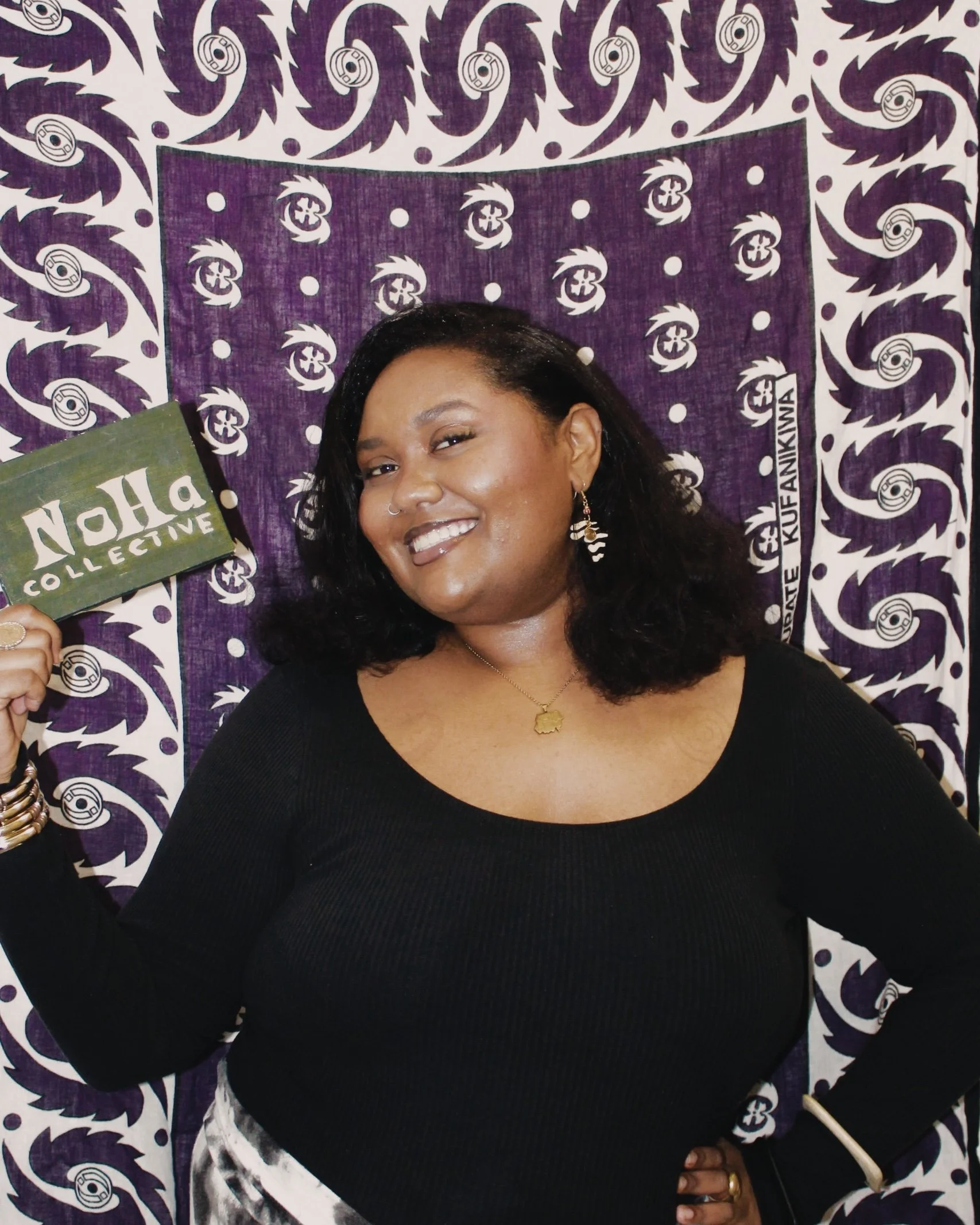
ABOUT OLA IDRIS
Ola Idris is a multi-national interdisciplinary artist, educator, programmer and political scientist. She centers care and imagination in her work, intending to reignite curiosity in the possibilities of a better, more interesting world. She is currently building art and culture-based programming with Fikra House and organizing to support Sudanese civilian groups on the ground with Sudan Solidarity Collective.